How a City Portfolio Eliminated Unresolved Issues, Reduced Emergencies, and Planned for Phased Replacements
Industry
Municipality
Portfolio Size
100+ Buildings
Region
Virginia
Services
5 Provided
Services Provided
The Challenge
The client managed a portfolio of over 100 buildings within Virginia. Roofing decisions were typically made reactively with emergencies as the impetus for large-scale projects (roof replacements). Budgeting for repairs and capital improvements was inconsistent due to a lack of clear data on roof condition, remaining life, and priority risks.
This led to:
- Unplanned emergency repair costs
- Difficulty forecasting capital needs
- Increased tenant disruption
- Limited documentation for portfolio reporting
The Objectives
The facility group wanted to shift from reactive spending to a predictable, long-term roofing strategy.
- Reduce emergency roofing events
- Prioritize high-risk roofs
- Improve reporting for asset management and budgeting
The Approach
Step 1: Portfolio Assessment
We conducted standardized roof inspections across all 100+ properties, documenting:
- Roof Type, Roof Grade
- Expected Replacement Date
- Roof Deficiencies
- Photo documentation
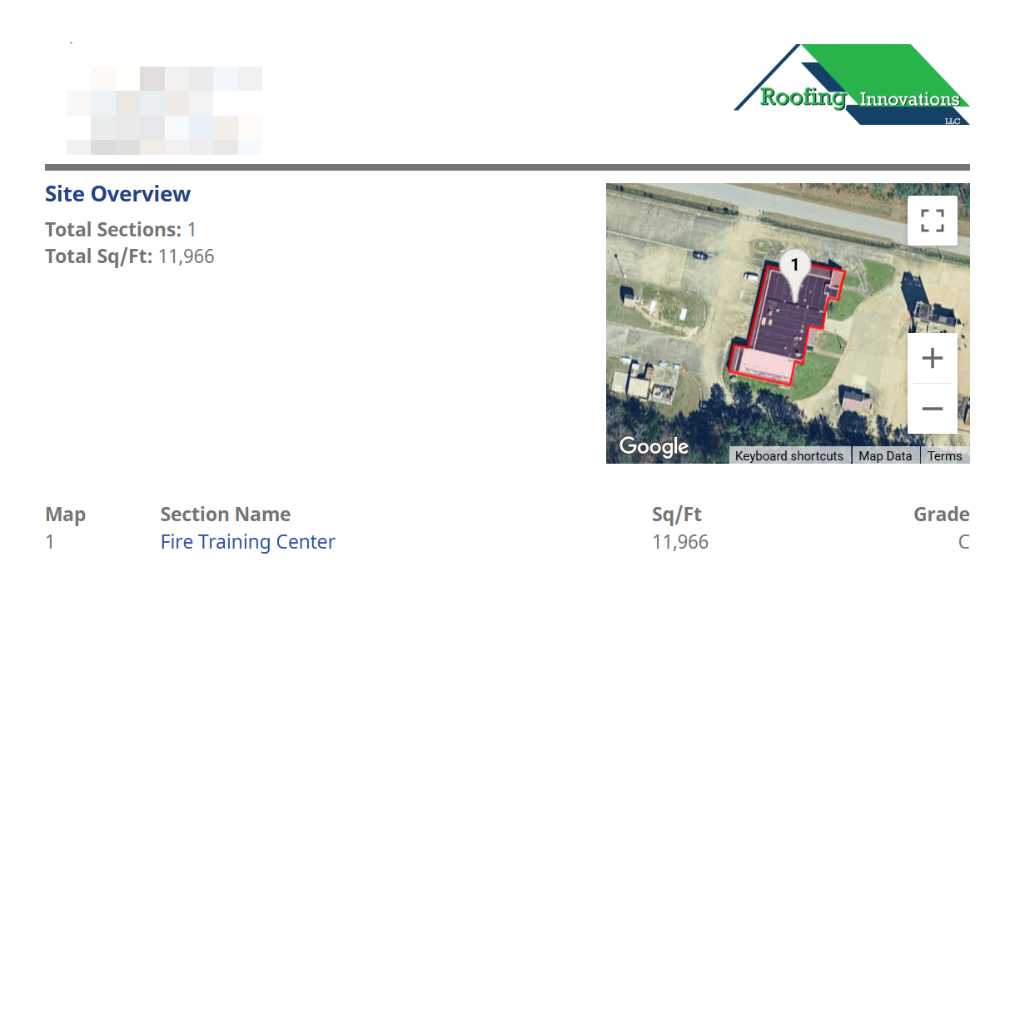
Site Overview — Fire Training Center (11,966 SF)
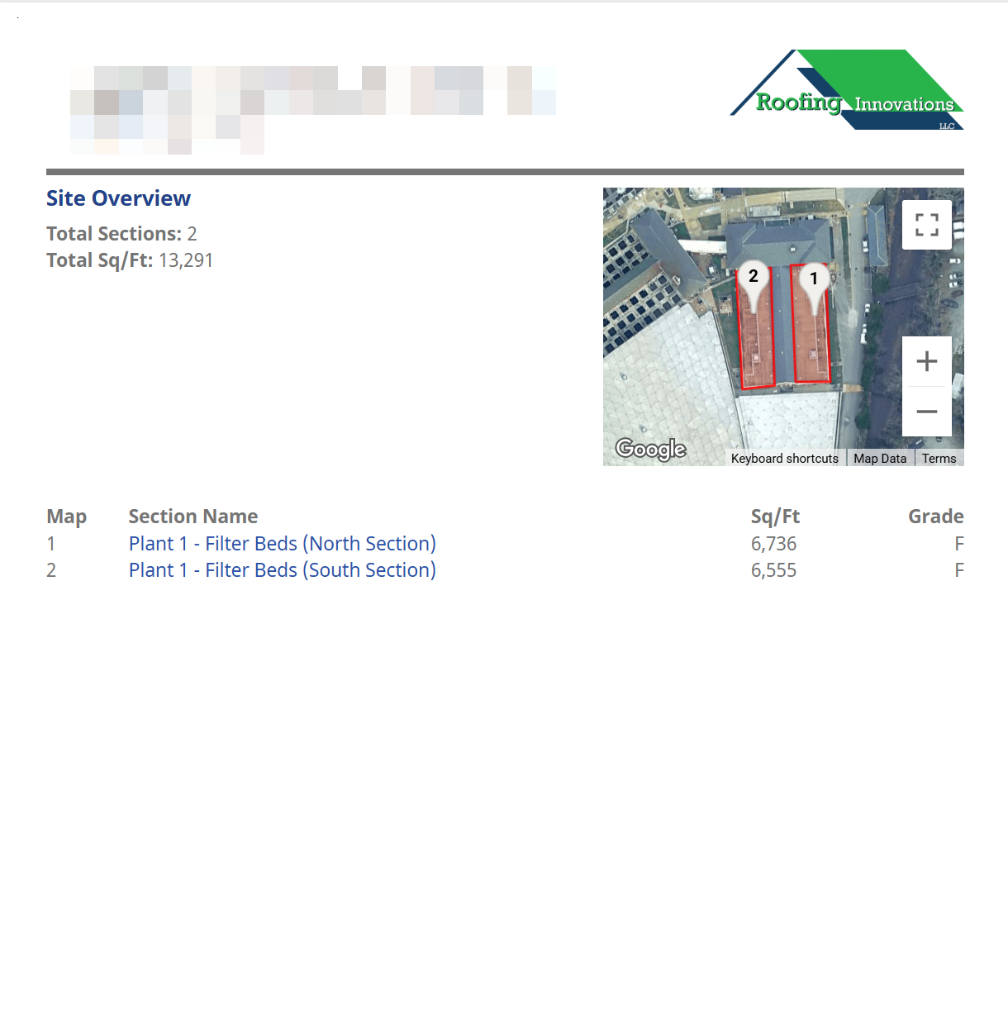
Site Overview — Plant 1 Filter Beds (13,291 SF)
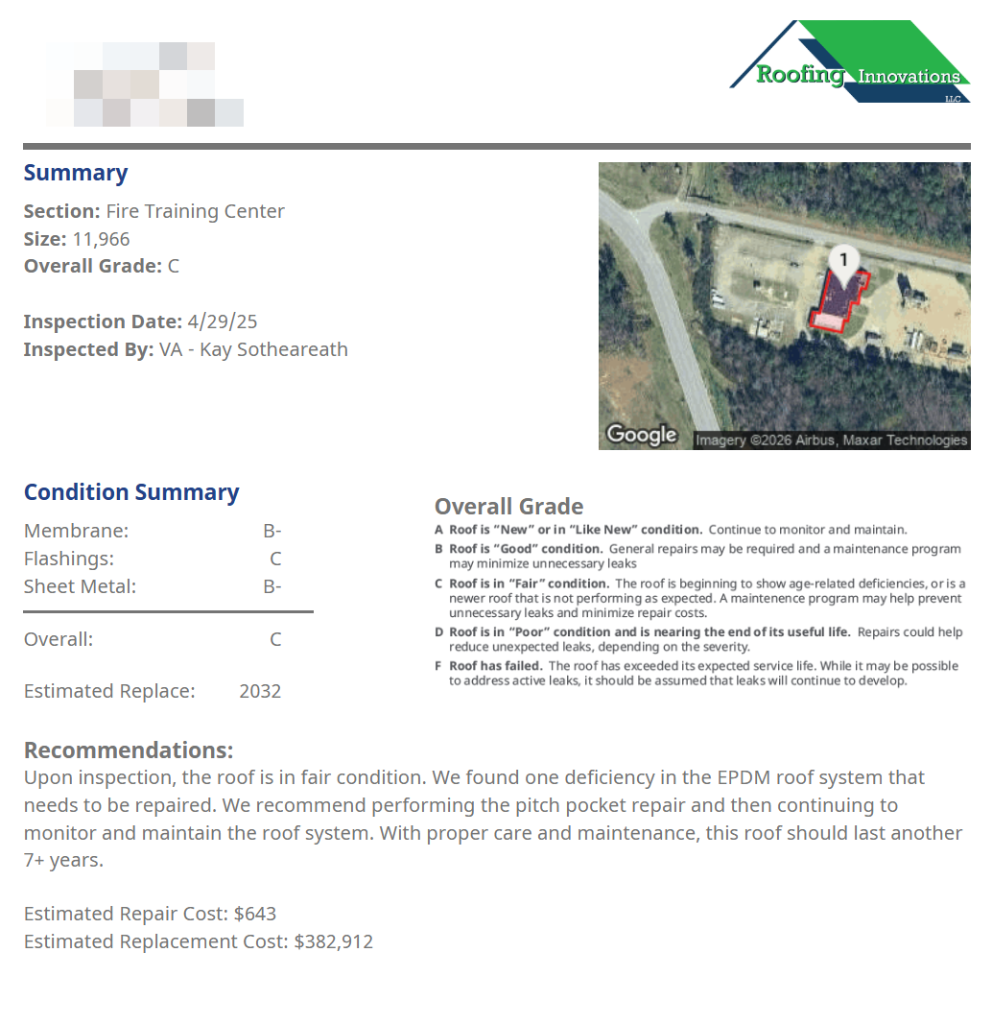
Sample Assessment Report — Section Summary (Fire Training Center)
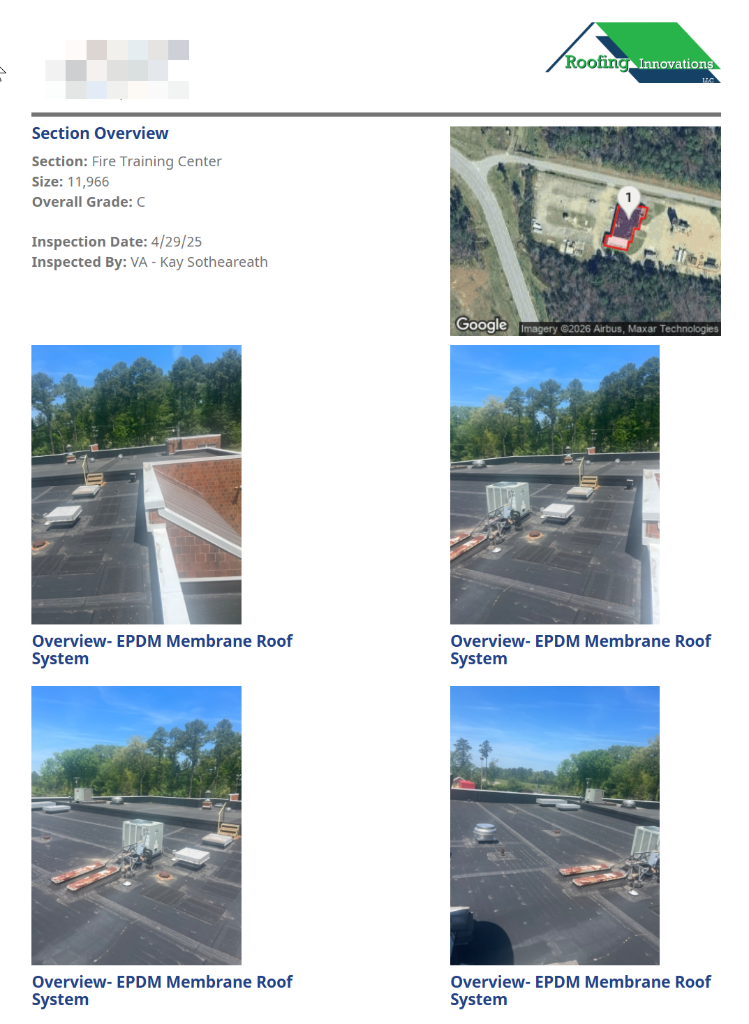
Sample Assessment Report — Section Overview (EPDM Membrane Roof)
Step 2: Lifecycle Forecasting
- Recommended repair vs. replacement timing
- Assigned Risk Potential (High, Medium, Low)
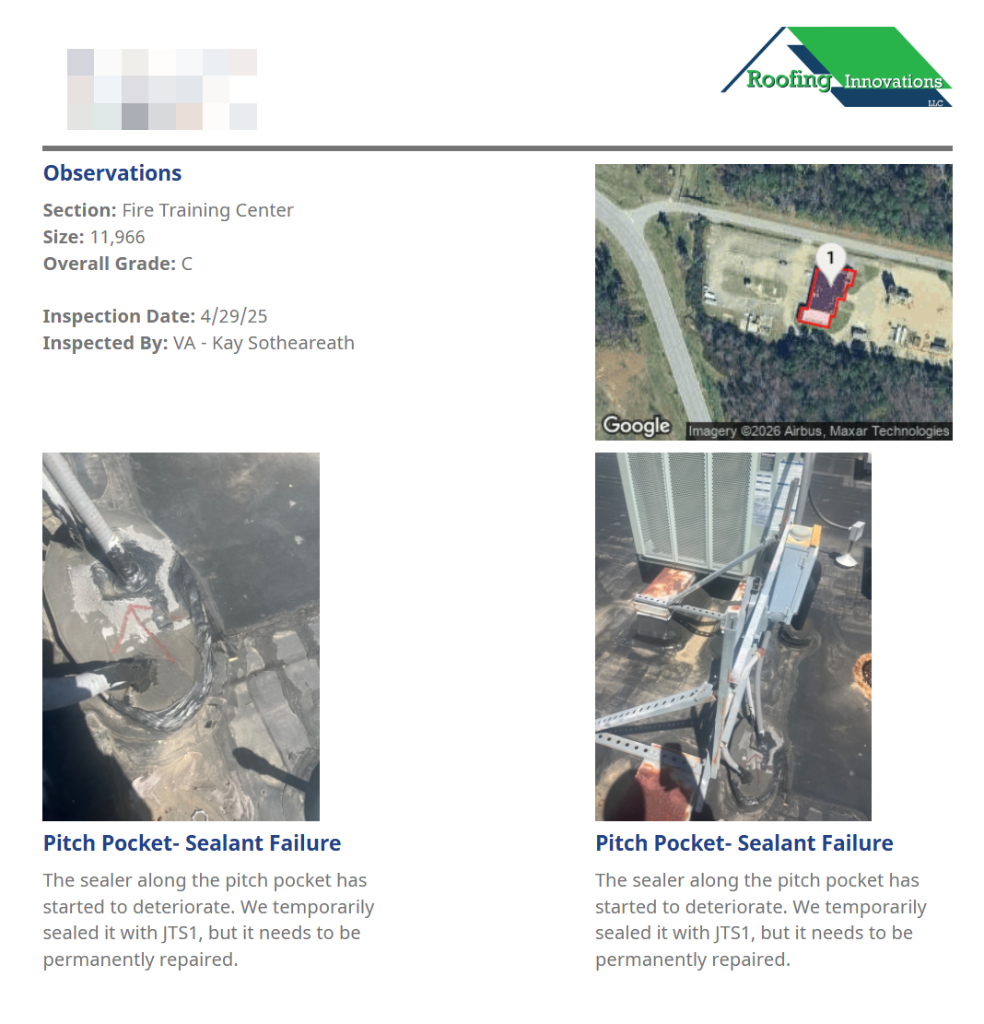
Sample Deficiency Report — Pitch Pocket Sealant Failure
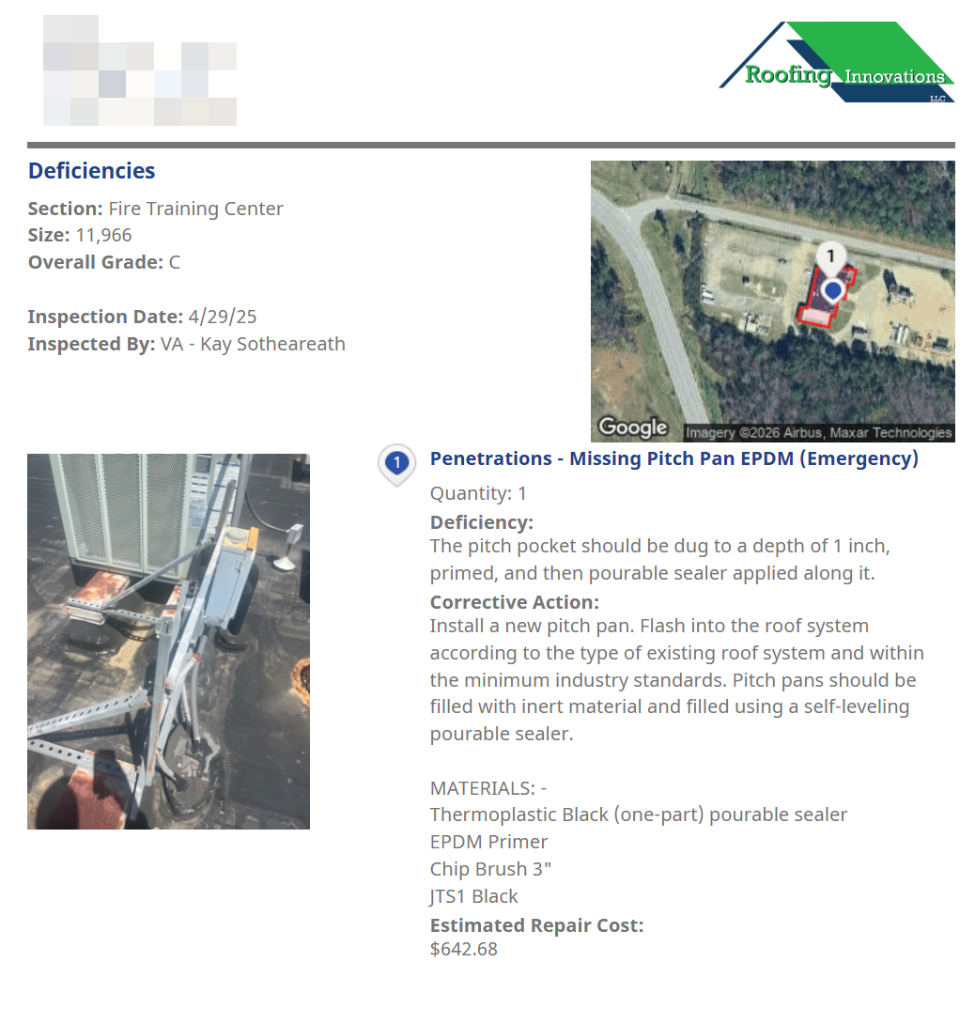
Sample Deficiency Report — Missing Pitch Pan EPDM (Emergency)
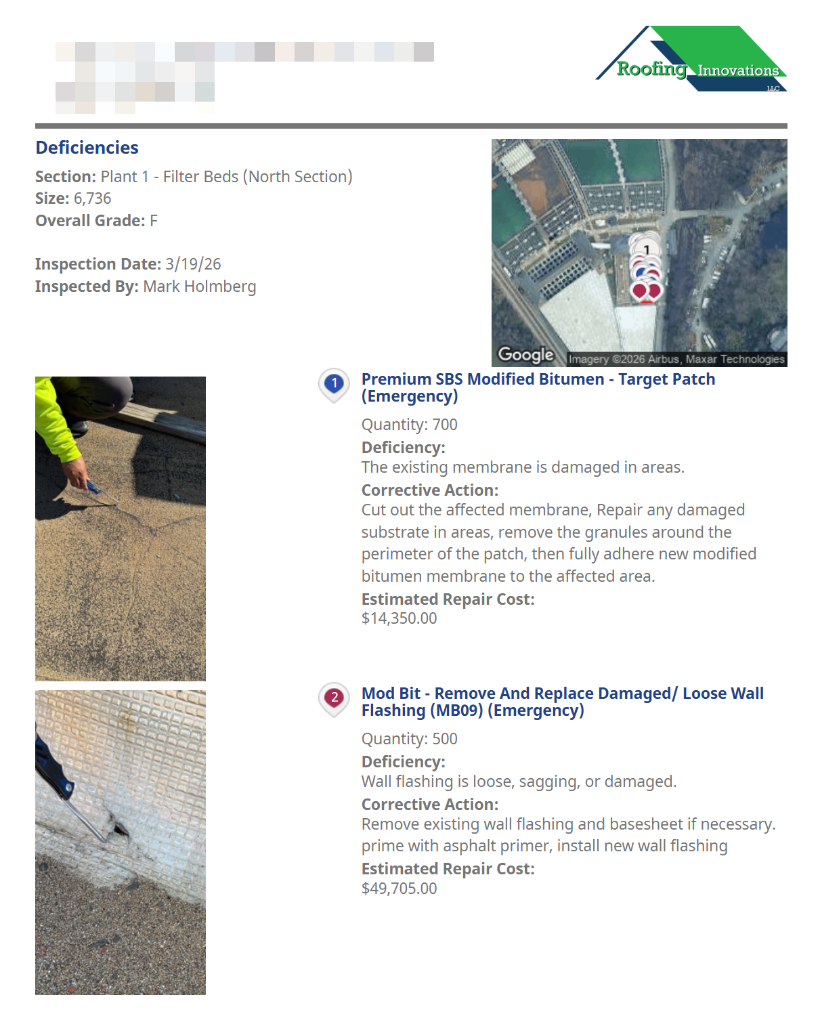
Sample Deficiency Report — SBS Modified Bitumen Repair
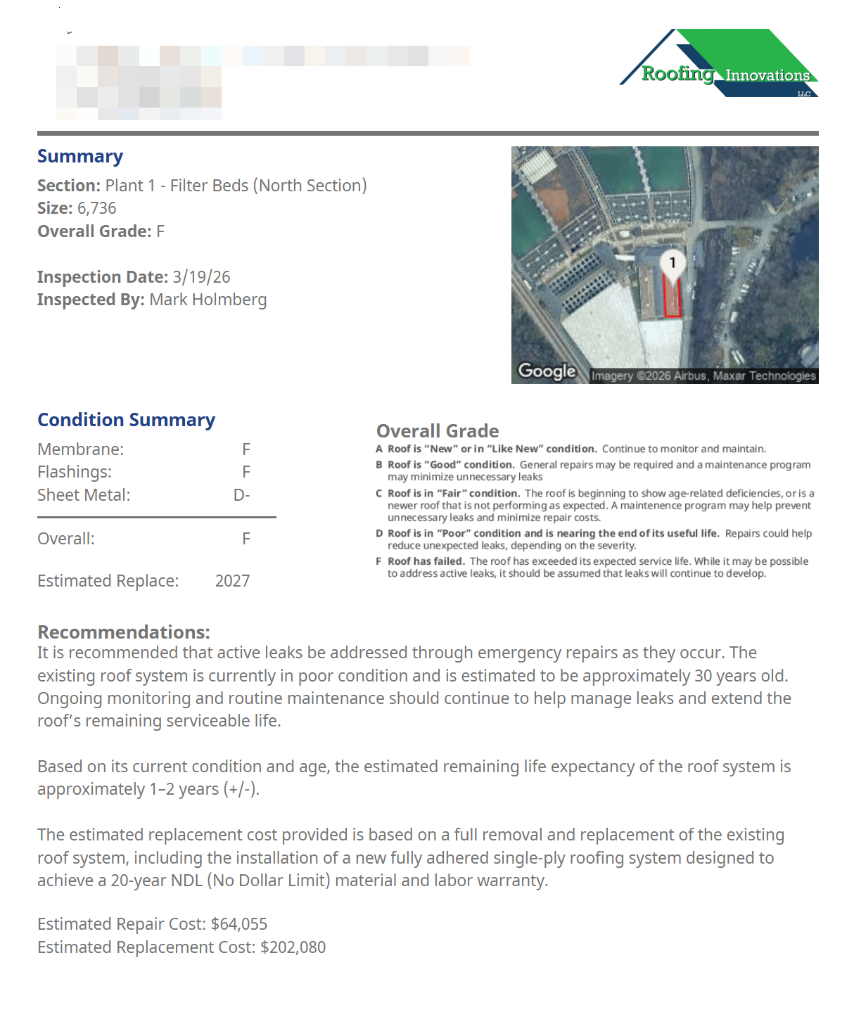
Sample Summary Report — Filter Beds North Section (Grade F)
Step 3: Capital Planning
- Consolidate reporting to more easily prioritize work
- Group and rank portfolio based on Risk Potential
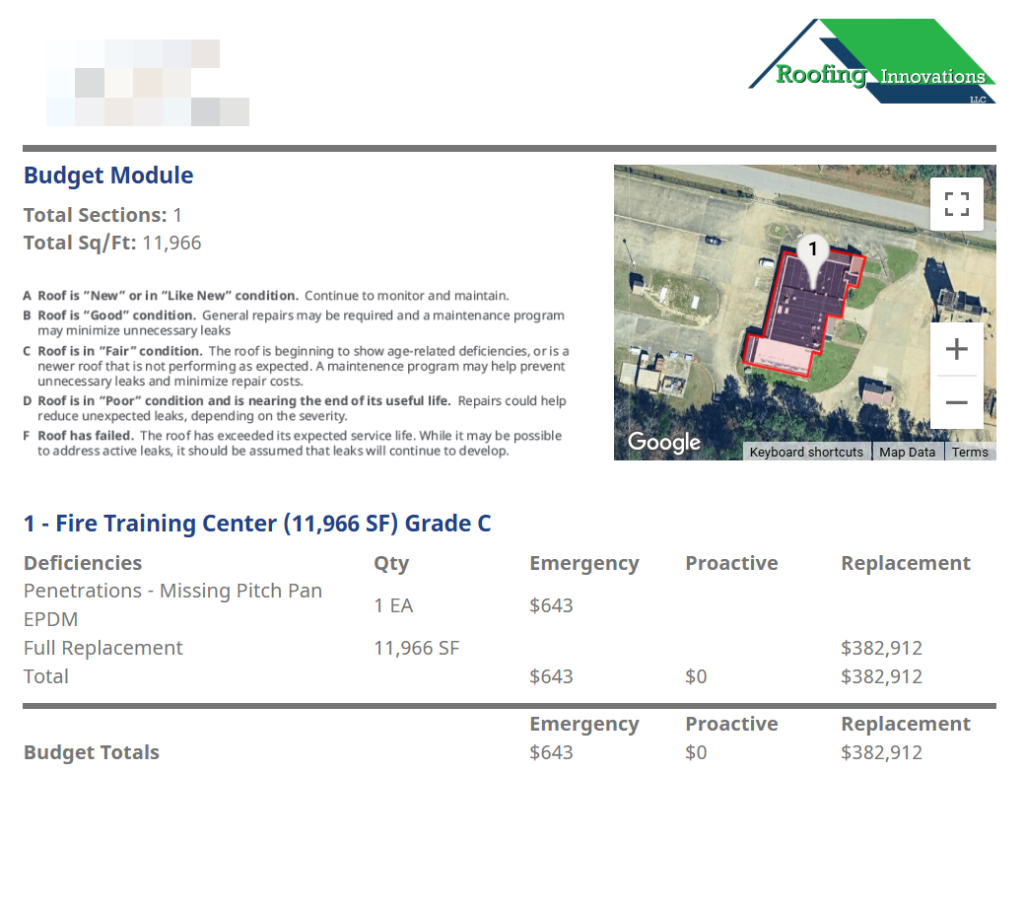
Budget Module — Fire Training Center Capital Planning
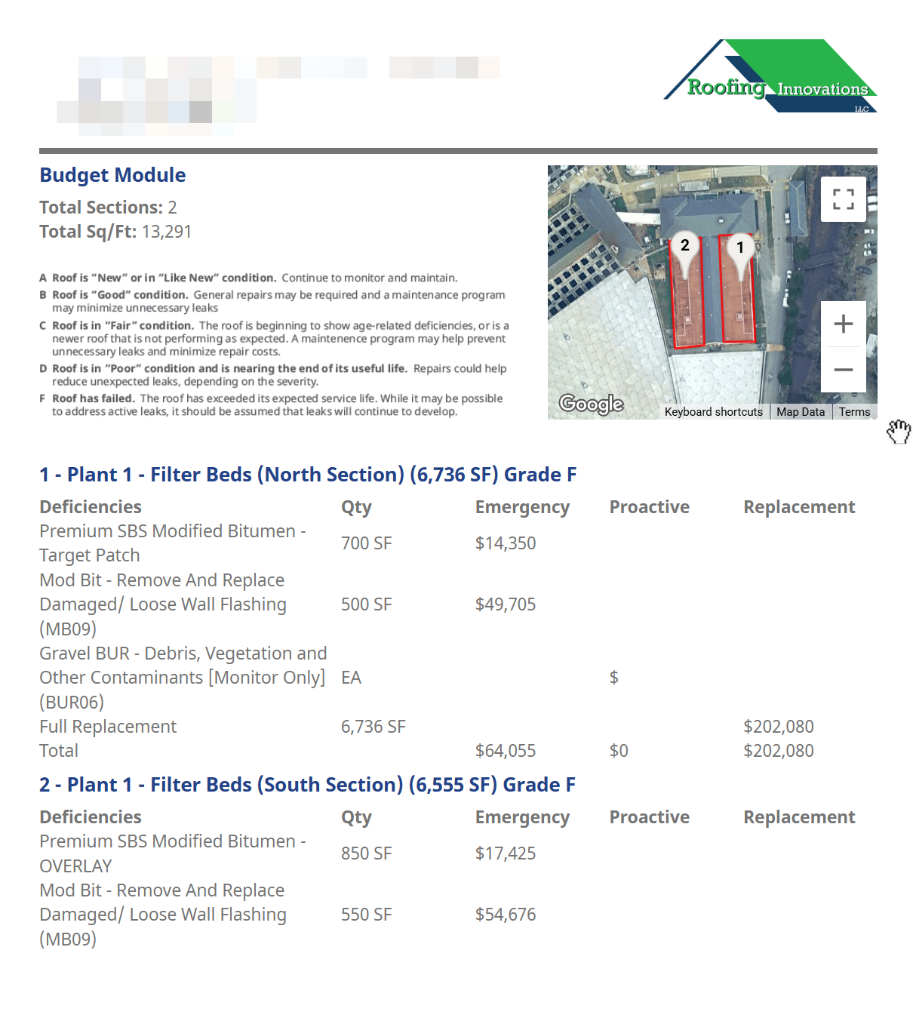
Budget Module — Plant 1 Filter Beds Capital Planning
Step 4: Emergency Management Outside of Plan
- Utilize emergency services for work outside of budgeted repairs
The Result
Within 24 Months
- Significant reduction in emergency leak calls
- Eliminated unresolved and on-going roof issues
- Overall reduction in roof-related deficiencies
- Budget-friendly re-roof alternatives on multiple buildings
"Facility Managers experienced a significant drop in the number of roof-related issues and eliminated high priority, unresolved and on-going issues which had caused friction between Facilities and tenants."
Ongoing Partnership
We continue to support the portfolio through:
- ✓Annual Roof Condition Assessments
- ✓Annual Budget Updates
- ✓Planning for Phased Replacements
- ✓Annual Preventative Maintenance
Save for Later
Download the Full Case Study
Get a formatted PDF of this case study to share with your facilities team or city leadership.